
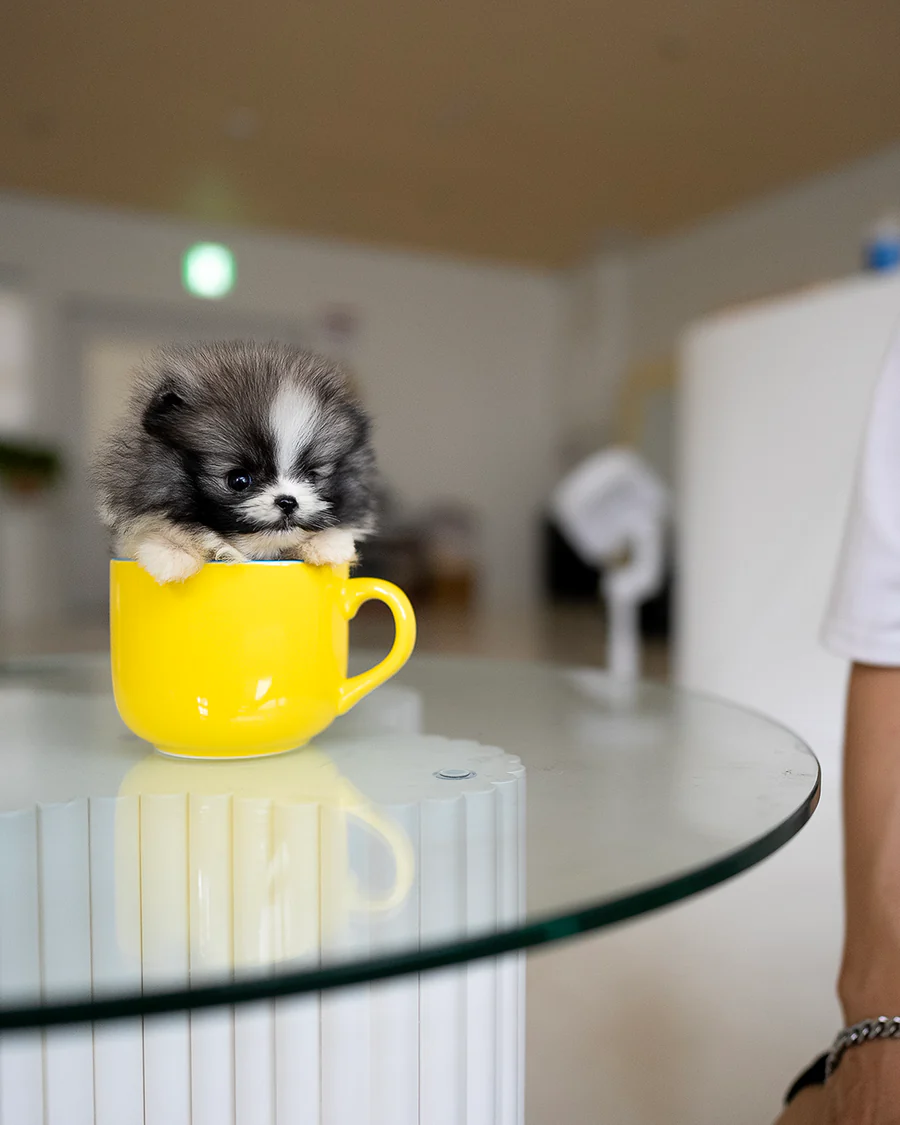
Adorable Pomeranian Puppy for Sale
Original price was: $1,200.00.$1,100.00Current price is: $1,100.00.
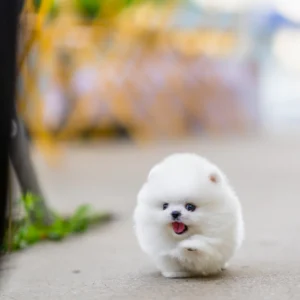
BREED: POMERANIAN
NAME: OLLIE
SEX: MALE
COLOR: PARTY COLOR
AGE: 3MONTHS
If you want this teacup puppies, please contact us.
You send us a picture of puppy, we will let you know if it is available now and about the puppy.
Pomeranian Puppy – Ollie | Adorable Pomeranian Puppy for Sale
Finding the right puppy is about more than choosing the cutest face. A good match means finding a companion whose temperament, size, grooming needs, exercise requirements, and care expectations fit your lifestyle. Pomeranian Puppy – Ollie is an appealing choice for anyone searching for a small, intelligent, fluffy companion with a lively personality and plenty of character.
The Pomeranian is a Toy Group breed known for its compact size, abundant double coat, alert expression, and confident personality. The American Kennel Club (AKC) describes Pomeranians as lively, inquisitive, and bold. Adult Pomeranians are generally around 6–7 inches tall and weigh approximately 3–7 pounds, with a typical life expectancy of 12–16 years.
This guide provides prospective owners with practical information about Pomeranian Puppy – Ollie, including personality, grooming, nutrition, exercise, training, socialization, health considerations, and what to look for when purchasing a Pomeranian puppy.
Primary search intent: Commercial and transactional. People searching for “Pomeranian Puppy – Ollie” are likely evaluating a specific puppy and want enough trustworthy information to decide whether a Pomeranian is appropriate for their home before making a purchase.
Featured Snippet: What Is Pomeranian Puppy – Ollie?
Pomeranian Puppy – Ollie is a small companion puppy from the Pomeranian breed, known for its fluffy double coat, lively personality, intelligence, and affectionate nature. Pomeranians are Toy Group dogs that typically reach 3–7 pounds as adults and can live 12–16 years with appropriate nutrition, veterinary care, grooming, exercise, training, and socialization.
Meet Pomeranian Puppy – Ollie
Pomeranian Puppy – Ollie is an attractive option for people looking for a compact companion dog with a distinctive appearance and an engaging personality.
Pomeranians are famous for having a surprisingly confident attitude for such a small dog. Their physical size may be tiny, but their personalities can be energetic, curious, intelligent, and expressive.
That combination is one of the breed’s greatest attractions.
A Pomeranian can happily participate in everyday family life, whether that means relaxing indoors, learning tricks, playing with toys, going for a short walk, or simply following a favorite person around the home.
However, prospective owners should understand that a Pomeranian is still a dog—not a toy or a low-maintenance accessory.
Small dogs require careful handling, appropriate training, regular grooming, veterinary care, and protection from household hazards.
If Ollie is going to become part of your family, the best preparation is to understand what Pomeranian ownership actually involves.
Why Choose a Pomeranian Puppy?
There is a reason Pomeranians remain one of the most recognizable toy breeds.
Their combination of appearance and personality is difficult to ignore.
Small but Full of Personality
Pomeranians are compact dogs with a big-dog attitude.
The AKC describes the breed as lively, inquisitive, and bold, noting that Pomeranians can be active while still adapting well to city and suburban living.
This makes them attractive to people who want an engaging companion without the physical demands associated with a large dog.
Intelligent and Trainable
Pomeranians are intelligent and can learn commands, tricks, games, and household routines.
They can also participate in activities such as obedience, agility, and rally when appropriately trained.
The important point is that intelligence does not mean training happens automatically.
Ollie will benefit from consistency, patience, positive reinforcement, and clear boundaries.
Affectionate Companions
Pomeranians often form strong relationships with their owners.
They enjoy human companionship and can be playful, affectionate, and entertaining.
For someone looking for a dog that actively participates in household life, the Pomeranian can be an excellent choice.
Adaptable Size
A major advantage of a Pomeranian is its compact size.
The breed can be suitable for apartments, smaller homes, and larger houses, provided the dog receives appropriate exercise and mental stimulation.
A small home does not eliminate the need for exercise, but it can make the practical logistics of ownership easier.
Pomeranian Puppy – Ollie Appearance and Size
One of the first things people notice about Ollie is likely to be the characteristic Pomeranian appearance.
The breed has a compact body, small upright ears, expressive eyes, a plumed tail, and an abundant double coat.
According to the AKC, adult Pomeranians typically stand approximately 6–7 inches tall and weigh 3–7 pounds. Their life expectancy is generally 12–16 years.
It is important, however, not to confuse a puppy’s current size with its final adult size.
Individual puppies grow at different rates, and an exact adult weight cannot be guaranteed simply by looking at a young puppy.
The Pomeranian’s Fluffy Double Coat
The coat is one of the defining features of the breed.
Pomeranians have a profuse double coat consisting of a dense undercoat and longer outer coat. The breed standard describes the coat as forming a ruff around the neck and a heavily plumed tail.
That beautiful appearance comes with responsibility.
Owners should be prepared for regular grooming throughout Ollie’s life.
Grooming Pomeranian Puppy – Ollie
If you are considering buying a Pomeranian puppy, grooming should be part of your decision—not an afterthought.
The fluffy Pomeranian coat needs regular maintenance to remain healthy and free from problematic matting.
How Often Should a Pomeranian Be Brushed?
Regular brushing is essential.
The AKC recommends brushing through the coat down to the skin approximately once a week using suitable brushes to help prevent mats.
Some Pomeranians may require more frequent brushing depending on coat condition, lifestyle, shedding, and individual needs.
Professional Grooming
Professional grooming can make Pomeranian ownership considerably easier.
The AKC recommends professional grooming approximately every four to six weeks for owners who are not comfortable handling a full grooming routine themselves.
A professional groom can include:
- Bathing
- Brushing
- Coat maintenance
- Nail trimming
- Ear care
- General hygiene
- Other routine grooming services
Dental Care
Do not focus exclusively on Ollie’s beautiful coat.
Dental hygiene is also important.
Small dogs can require particular attention to their teeth, so establish a suitable dental-care routine early and discuss appropriate products and professional dental checks with your veterinarian.
Nail Care
Pomeranians are active little dogs, and keeping their nails appropriately trimmed is an important part of routine care. The AKC specifically recommends paying attention to nail length.
Pomeranian Puppy – Ollie Temperament
A puppy’s exact personality cannot be guaranteed from breed alone.
Genetics, early experiences, socialization, training, environment, and individual temperament all influence how a puppy develops.
However, the Pomeranian breed is generally recognized for its intelligence, confidence, alertness, curiosity, and lively nature.
Curious
Pomeranians tend to be interested in what is happening around them.
Ollie may want to investigate new sounds, objects, people, and environments.
This curiosity is useful during training, but it also means owners need to puppy-proof the home.
Alert
Pomeranians are observant dogs.
They may notice noises outside the home or unfamiliar activity quickly.
Without appropriate training, that alertness can develop into excessive barking.
Teaching Ollie when to settle can therefore be an important part of early training.
Playful
A Pomeranian’s small size does not mean it lacks energy.
Ollie can enjoy interactive toys, training games, short walks, and supervised play.
Mental stimulation is particularly valuable because intelligent dogs can become bored when their environment is too repetitive.
Training Pomeranian Puppy – Ollie
Training should begin as soon as Ollie is ready for appropriate puppy training.
Pomeranians are intelligent, but they can also be independent.
The most effective approach is usually consistent, reward-based training rather than harsh punishment.
The AKC recommends early socialization and puppy training classes and notes that positive reinforcement is appropriate for the breed.
Start With the Basics
Prioritize:
- Responding to his name
- Toilet training
- Basic obedience
- Leash training
- Recall
- Appropriate chewing
- Calm behavior
- Gentle handling
- Socialization
- Household boundaries
Toilet Training
House training can require patience with Pomeranians.
The AKC specifically notes that housebreaking can be challenging and recommends consistency and patience.
Avoid punishment when accidents happen.
Instead, create a predictable routine and reward appropriate behavior.
The objective is to make the correct behavior easy to repeat.
Socializing Pomeranian Puppy – Ollie
Socialization is one of the most important parts of raising a confident dog.
It does not mean forcing Ollie to interact with everyone.
Instead, introduce him gradually and positively to appropriate experiences.
These may include:
- Different people
- Household sounds
- Car journeys
- Grooming
- Veterinary handling
- Different surfaces
- Appropriate dogs
- New environments
- Household routines
- Being handled gently
Early socialization can help a puppy learn that unfamiliar experiences are not automatically threatening.
The AKC recommends early socialization and puppy training classes for Pomeranians.
Exercise Requirements for Ollie
One of the advantages of a Pomeranian is that the breed does not require the same level of physical exercise as a large working dog.
However, that does not mean Ollie should spend the entire day inactive.
Pomeranians benefit from short walks, play, exploration, and mental stimulation.
The AKC notes that Pomeranians enjoy running, playing, and walking and can receive useful exercise through indoor play as well.
A Practical Daily Routine
A simple routine could include:
Morning: Toilet break, breakfast, short training session.
Midday: Play, toilet break, rest, and mental stimulation.
Afternoon: Short walk or supervised activity.
Evening: Play, grooming or handling practice, dinner, toilet break, and quiet family time.
The exact routine should be adjusted for Ollie’s age, health, energy level, and veterinary advice.
Pomeranian Puppy Safety
Because Pomeranians are small, owners need to take their physical vulnerability seriously.
A fall from furniture or accidental collision with a larger dog can be much more significant for a tiny puppy than for a large breed.
The AKC warns that Pomeranians can injure joints or bones by jumping on and off furniture.
Keep Ollie Safe Around:
- High furniture
- Stairs
- Large dogs
- Open gates
- Unsecured balconies
- Small objects
- Electrical cables
- Toxic household substances
- Pools and other water hazards
Outdoor supervision is particularly important.
The AKC notes that Pomeranians can escape through surprisingly small gaps and that owners should closely supervise them outside.
Feeding Pomeranian Puppy – Ollie
Nutrition should be based on Ollie’s age, size, growth stage, activity level, and individual health needs.
Choose a complete and balanced puppy diet appropriate for small-breed puppies and follow feeding guidance from the manufacturer and your veterinarian.
The AKC advises that Pomeranians should receive high-quality food appropriate to their life stage and that owners should monitor calories and weight because some dogs can become overweight.
Avoid Overfeeding
It can be tempting to give a tiny puppy lots of treats.
That can create problems.
Treats should be used strategically during training and should form only an appropriate part of the overall diet.
Fresh water should always be available.
Pomeranian Health Considerations
A responsible product description should not pretend that every puppy is guaranteed to remain perfectly healthy.
No breed is free from health risks.
Pomeranians are generally considered healthy little dogs, but the AKC identifies several conditions that prospective owners should discuss with breeders and veterinarians.
These include:
- Luxating patella
- Hypothyroidism
- Collapsing trachea
- Congestive heart failure
- Seizures
- Alopecia X
The AKC also lists recommended breed-club health evaluations including patella evaluation, cardiac examination, and ophthalmologist evaluation.
The American Pomeranian Club’s health information also emphasizes the value of reviewing available health-testing information for the puppy’s parents.
What Should a Buyer Ask For?
Before purchasing Ollie, prospective owners should ask for relevant documentation, such as:
- Veterinary examination records
- Vaccination records
- Deworming information
- Microchip information where applicable
- Parent health-testing information
- Puppy identification
- Feeding instructions
- Contract or purchase documentation
- Details about the puppy’s early socialization
A trustworthy seller should be willing to answer reasonable questions.
Pros and Cons of Owning Pomeranian Puppy – Ollie
Advantages
- Very compact companion size
- Distinctive fluffy appearance
- Intelligent and trainable
- Playful personality
- Affectionate with owners
- Can adapt to many living environments
- Enjoys indoor games
- Does not require extensive long-distance exercise
- Can learn tricks and obedience behaviors
Potential Challenges
- Regular grooming is necessary
- Can be vocal without appropriate training
- Small body requires careful handling
- House training may take patience
- Needs regular socialization
- Can become bored without mental stimulation
- Requires protection from larger dogs and household hazards
The breed is therefore best suited to people who appreciate a small dog but are willing to provide real training and care.
Is Pomeranian Puppy – Ollie Right for You?
A Pomeranian may be an excellent choice if you want a small companion with an energetic personality and distinctive appearance.
Ollie could be a good match for someone who:
- Wants a small companion dog
- Enjoys interactive pets
- Has time for grooming
- Is prepared to train consistently
- Wants an affectionate household companion
- Can provide safe exercise
- Understands the needs of toy breeds
A Pomeranian may be less suitable if you:
- Want a completely quiet dog
- Dislike grooming
- Expect immediate house training
- Have very young children who may handle a tiny dog roughly
- Want a dog for strenuous outdoor activity
- Do not have time for regular interaction
Choosing the right puppy is not simply about appearance.
It is about compatibility.
Pomeranian Puppy vs. Other Small Dogs
People searching for Pomeranian puppies for sale often compare them with other toy and companion breeds.
The Pomeranian stands out primarily because of its combination of:
| Feature | Pomeranian |
|---|---|
| Adult size | Approximately 3–7 lb |
| Height | Approximately 6–7 inches |
| Coat | Abundant double coat |
| Personality | Lively, curious, bold |
| Exercise | Short walks and play can be suitable |
| Grooming | Regular brushing required |
| Training | Intelligent but requires consistency |
| Life expectancy | Approximately 12–16 years |
These figures describe the breed generally rather than guaranteeing Ollie’s individual adult size, temperament, or lifespan.
Step-by-Step Guide Before Bringing Ollie Home
Step 1: Prepare a Safe Space
Set up a comfortable sleeping and resting area.
Step 2: Puppy-Proof Your Home
Remove dangerous objects, secure electrical cables, and block unsafe areas.
Step 3: Prepare Food and Water
Have an appropriate puppy diet and clean water available.
Step 4: Prepare Grooming Equipment
Purchase a suitable brush and basic grooming supplies before Ollie arrives.
Step 5: Arrange Veterinary Care
Review existing health records and arrange veterinary follow-up according to professional advice.
Step 6: Establish a Routine
Create consistent times for feeding, toilet breaks, play, training, and rest.
Step 7: Begin Socialization
Gradually introduce Ollie to appropriate people, sounds, environments, and experiences.
Step 8: Start Training
Use short, positive training sessions and reward desired behavior.
What Makes Pomeranian Puppy – Ollie Special?
The appeal of Pomeranian Puppy – Ollie is ultimately about the combination of breed characteristics and individual personality.
Pomeranians have an unusual history compared with their modern appearance. They belong to the Spitz type and descend from larger Spitz dogs. The breed’s name is associated with Pomerania, a historical region in Central Europe.
Over time, Pomeranians became much smaller and developed into the distinctive companion breed people recognize today.
Their small body, abundant coat, expressive face, and confident personality make them instantly recognizable.
That does not mean every Pomeranian behaves identically. Ollie will develop his own personality as he grows.
And that is part of the fun of bringing a puppy home.
Responsible Pomeranian Puppy Ownership
Buying Pomeranian Puppy – Ollie should be viewed as the beginning of a long-term relationship rather than the end of a shopping process.
A responsible owner should be prepared for years of:
- Veterinary care
- Grooming
- Training
- Nutrition
- Exercise
- Socialization
- Companionship
- Safety management
The breed’s typical lifespan of 12–16 years means bringing home a Pomeranian can represent a substantial long-term commitment.
Before making a purchase, verify the puppy’s information and ask questions.
Do not make a decision based exclusively on photographs or an attractive price.
A beautiful puppy is only one part of a responsible purchase.
Final Thoughts on Pomeranian Puppy – Ollie
Pomeranian Puppy – Ollie is an appealing option for anyone looking for a small, fluffy, intelligent, and lively companion.
Pomeranians are much more than their beautiful coats. They are alert, curious, intelligent dogs that need proper training, socialization, grooming, exercise, nutrition, and veterinary care.
Ollie can be a rewarding companion for the right household, particularly for owners who understand the responsibilities associated with a very small breed.
Before bringing Ollie home, make sure your household is prepared for the commitment. Verify health and veterinary information, understand grooming requirements, prepare a safe environment, and establish a consistent routine from the beginning.
For additional breed information, consult the Puppy Paradis and its guidance on whether the Pomeranian fits your lifestyle.
You can also read the Wikipedia overview of the Pomeranian dog for additional background on the breed’s history, appearance, and development.
The most important question is not simply, “Is Ollie adorable?”
He probably is.
The better question is: Can your household provide the care, attention, training, safety, and companionship a Pomeranian needs?
If the answer is yes, Ollie could become a wonderful little companion and an important part of your family.
Frequently Asked Questions About Pomeranian Puppy – Ollie
1. How big will Pomeranian Puppy – Ollie become?
Adult Pomeranians typically stand around 6–7 inches tall and weigh approximately 3–7 pounds. However, individual dogs can vary, so an exact adult size cannot be guaranteed based only on puppy size.
2. Is Ollie suitable for an apartment?
Pomeranians can adapt well to apartment and city living because of their compact size and ability to exercise through short walks and indoor play. They still need regular activity, training, mental stimulation, and safe opportunities to explore.
3. How often should a Pomeranian puppy be groomed?
A Pomeranian’s coat needs regular brushing to help prevent matting. The AKC recommends brushing approximately once a week down to the skin and suggests professional grooming every four to six weeks if the owner is not comfortable performing the complete grooming routine.
4. Are Pomeranians easy to train?
Pomeranians are intelligent and capable of learning commands and tricks, but they require consistency and patience. Positive reinforcement and early socialization are recommended. House training can take additional time.
5. Are Pomeranians good family dogs?
Pomeranians can be affectionate family companions, but their very small size means children need to understand how to handle them safely. The AKC considers them particularly suitable for families with older children who can distinguish between a small dog and a toy.
6. What health checks should I ask about before buying Ollie?
Ask about veterinary records and available health testing for the puppy’s parents. The AKC identifies patella, cardiac, and ophthalmologist evaluations among recommended health tests for the breed.
7. How long do Pomeranians live?
The AKC gives Pomeranians a typical life expectancy of approximately 12–16 years. Individual lifespan depends on genetics, health, nutrition, veterinary care, lifestyle, and other factors.
Be the first to review “Adorable Pomeranian Puppy for Sale”
Related products
Pomeranian
Pomeranian
Pomeranian
Pomeranian
Pomeranian
Pomeranian
Pomeranian
Pomeranian
Reviews
There are no reviews yet.